Best Pantry Storage Containers in South Africa: Built for 10kg Bags and Weevil Season
Last checked: 2 July 2026 Price bands are indicative, not quotes. Listings change.
Quick answer
For most South African pantries the winning setup is a mid-size airtight container set for everyday staples plus one or two 15L-plus bins for the 10kg maize meal and rice bags, all labelled. Budget roughly R150 to R400 imported for a starter set, more for the jumbo bins. Cereal dispensers are the category's half-gimmick; a normal airtight container pours just as well.
The picks
Everyday staples: flour, sugar, pasta, rusks, cereal
Airtight food container set (clip-lid or push-button, modular)
Every pick, compared
| # | Product type | Best for | Verdict | Score | |
|---|---|---|---|---|---|
| 01 | Airtight food container set (clip-lid or push-button, modular) | Everyday staples: flour, sugar, pasta, rusks, cereal | Godsend | 9.0 | Details |
| 02 | Jumbo airtight bins for maize meal, rice and flour (10L and up) | The 10kg bags that define South African bulk shopping | Godsend | 8.7 | Details |
| 03 | Stackable clear pantry bins (open-top, with handles) | Grouping packets, tins, sauces and snack chaos without decanting | Solid buy | 7.9 | Details |
| 04 | Spice jar set with labels and funnel | Drawers and shelves where forty mismatched spice packets fight | Solid buy | 7.6 | Details |
| 05 | Pantry labelling: chalk labels or a thermal label maker | Making any container system survive contact with the household | Solid buy | 7.2 | Details |
| 06 | Cereal dispensers (gravity twist, counter or wall mount) | Guesthouse breakfast corners and small kids; most households regret them | Gimmick | 6.3 | Details |
Why each one made the list
Pantry advice written overseas assumes cereal boxes and cup-sized flour bags. A South African cupboard has to swallow a 10kg bag of maize meal, a 10kg rice bag when the special was good, and a sugar supply that ants regard as municipal property. Containers here are not decor; they are pest control, dust control and the difference between a cupboard you use and a cupboard you fear.
Best overall
Airtight food container set (clip-lid or push-button, modular)
Best for: Everyday staples: flour, sugar, pasta, rusks, cereal
A godsend and the backbone of any pantry system. One decent set ends stale biscuits, ant raids on the sugar and the shelf of half-rolled bags held shut by pegs.
Why it is useful
A modular airtight set replaces the bag-and-peg system with square, stackable, sealable containers. Square matters: round jars waste roughly a quarter of a shelf. Sealed matters more: summer ants and year-round pantry moths and weevils treat an open bag as an invitation. Push-button lids give one-handed opening; clip-lids have fewer parts to fail. Both work for as long as the gasket does.
Small problem solved
The shelf of sagging opened bags, plus the annual discovery that something at the back has become an ecosystem.
Check before buying
- A silicone gasket you can see and ideally replace; "airtight" with no visible gasket is a lid, not a seal
- Square or rectangular bodies for shelf efficiency
- Stated litre capacity per container, not just the piece count
- Clear bodies so contents and levels are visible without opening
- On push-button styles, recent reviews mentioning the button mechanism; it is the first failure point on cheap clones
Skip it if
- The budget covers only one purchase: buy the jumbo staple bins first and come back for the set
- You know you will never decant; containers only work if the bag actually gets emptied into them
Worth it for
- Genuinely airtight storage ends stale, ants and spills in one move
- Square stackable bodies pack a shelf far tighter than bags and round jars
- Clear sides make running-low visible before it is a crisis
- One system with one label style, and the pantry stops being archaeology
Not worth it for
- Good sets are not cheap, and cheap sets are often not actually airtight
- Push-button mechanisms fail before the containers do
- Decanting is a chore you are signing up for
SA note Run the water test on arrival: fill, seal, hold upside down over the sink. A lid that drips water will admit ants, and a Durban or Joburg summer will test that seal harder than any review.
airtight food storage container setpantry containers push button lid Links may earn Godsend a commission. Availability and prices change; check the live listing.
Best for SA staples
Jumbo airtight bins for maize meal, rice and flour (10L and up)
Best for: The 10kg bags that define South African bulk shopping
A godsend sized for how this country actually shops. Standard container sets top out around 2 or 3 litres; a 10kg maize meal bag laughs at that. One or two proper 15L bins solve the biggest, heaviest storage problem in the cupboard.
Why it is useful
As a rough rule, 10kg of maize meal needs about 15 to 16 litres of container and 10kg of rice about 12 to 13. That mismatch is why the big bag lives folded over on the floor: nothing in a normal set fits it. A 15L-plus bin with a gasket lid, a wide mouth and ideally wheels or side grips gives the staple a permanent, weevil-resistant home, and scooping from a wide opening beats wrestling the bag every supper.
Small problem solved
The open 10kg bag on the cupboard floor: weevils in, moisture in, dust on top, and a nightly scoop operation involving prayer.
Check before buying
- Litre rating against the bag: 15L or more for 10kg of maize meal, roughly 12L for 10kg of rice
- A gasket-sealed lid, not a friction-fit lid; friction lids are dust covers, not seals
- A wide mouth that takes a cup or scoop, since fine meal bridges and clogs narrow openings
- Wheels or proper side grips on anything this size; 10kg plus the bin is a two-hand lift
- Food-grade PP stated in the listing, especially on no-name buckets
Skip it if
- You buy staples in 1 or 2kg bags; a normal container set covers that with far less bulk
- Floor space is the scarcest resource in your kitchen; a bin this size needs a permanent parking spot
Worth it for
- Actually fits the 10kg bag, which nothing in a standard set does
- A sealed lid blocks weevils from spreading and ants from arriving
- Scoop access ends the nightly bag wrestle
- Doubles for dog food, which is the same problem from a different aisle
Not worth it for
- Bulky, and rigid bulk ships badly, so imported options often lose their price edge
- Cheap buckets without gaskets are just large dust covers
- A full bin is heavy; wheels help, but not up stairs
SA note If you have freezer space, freeze a new bag of maize meal or flour for two to four days before decanting; it kills weevil eggs that arrive from the mill. The sealed bin then keeps any survivors from touring the rest of the cupboard.
rice storage container 10kglarge airtight food storage bin 15l Links may earn Godsend a commission. Availability and prices change; check the live listing.
Best cheap tidy-up
Stackable clear pantry bins (open-top, with handles)
Best for: Grouping packets, tins, sauces and snack chaos without decanting
Solid, and the low-effort half of the system. Open bins seal nothing; they group things, and grouping is most of what a messy cupboard needs. Buy bins for categories and airtight containers for ingredients.
Why it is useful
Not everything gets decanted. Soup packets, tins, oils, braai sauces and the snack hoard just need grouping, and open clear bins turn a deep shelf into pull-out drawers, the same trick that works in the fridge. One bin per category means a Sixty60 haul has an address for everything and the back of the cupboard stops being a mystery.
Small problem solved
The deep cupboard where duplicates breed because nobody can see what is already there.
Check before buying
- Depth against your cupboard: standard kitchen cupboards are shallower than walk-in pantries, so measure before buying long bins
- Cut-out handles and a smooth base that slides on melamine shelves
- Straight sides so bins tile the shelf without wasted wedges
- PET or PP plastic; glassy brittle bins chip at the corners
Skip it if
- Dust or pests are the actual problem; open bins protect against disorder, not against anything that crawls or settles
- The packets going in are already open; that is airtight-container work
Worth it for
- Cheapest way to make a deep cupboard searchable
- No decanting commitment
- Pull-out access like drawers, without fitting drawers
Not worth it for
- Zero protection from ants, weevils, moisture or dust
- Cheap bins crack at the handles
- Grouping only works if the categories survive contact with the household
clear pantry organiser bins handlesstackable pantry storage bins Links may earn Godsend a commission. Availability and prices change; check the live listing.
Best for spices
Spice jar set with labels and funnel
Best for: Drawers and shelves where forty mismatched spice packets fight
Solid, bordering on satisfying. Uniform jars with shaker inserts and labels turn spice chaos into a system, and refilling from economy packets gets cheaper over time. The only warning is scope creep: nobody needs 48 jars on day one.
Why it is useful
Spices here are often bought as flat refill packets that do not stand, do not pour and do not survive humidity once opened. A uniform jar set with shaker and pour inserts, a funnel and labels standardises the whole shelf: jars stack in a drawer or on a riser, refills decant cleanly, and the label ends the identification gamble mid-recipe.
Small problem solved
The spice avalanche of folded-over packets, and the moment the fish spice turns out to be cinnamon.
Check before buying
- Glass jars with gasketed or bamboo lids seal better than thin plastic shakers
- A blank-label supply in the box, since pre-printed sets never match a real shelf
- Jar count versus your actual collection; 12 to 24 covers most kitchens
- Insert types: shaker holes for herbs, open pour for coarse salt and braai rubs
Skip it if
- Your spices already live in matching branded jars you refill; re-jarring identical jars is a hobby, not organisation
- You cook rarely; whole packets straight into one airtight box serves an occasional cook better
Worth it for
- Uniform jars finally stack and store properly
- Refill packets become cheaper than buying branded jars every time
- Labels end mid-cooking identification errors
Not worth it for
- Decanting thirty spices is an afternoon of your life
- Cheap shaker inserts crack and pop out
- Pre-printed label sets never quite match a local spice shelf
SA note Expect to hand-write the labels that matter most here: braai salt, chakalaka spice and the biltong seasoning are not in any imported pre-printed pack.
spice jar set labels funnelglass spice jars bamboo lid set Links may earn Godsend a commission. Availability and prices change; check the live listing.
Best finishing touch
Pantry labelling: chalk labels or a thermal label maker
Best for: Making any container system survive contact with the household
Solid, and more load-bearing than it looks: an unlabelled container system dies the first time someone refills the wrong bin. Chalk labels are the cheap, flexible default; a thermal label maker is tidier but adds a gadget and consumables.
Why it is useful
Labels turn a pile of containers into a system other people can maintain. Chalkboard stickers plus a chalk marker cost little, survive wiping and rewrite themselves when the quinoa phase ends. Thermal label makers print crisp uniform labels on demand, and the cheap generic ones work fine; the catch is tape refills, an app and one more thing to charge.
Small problem solved
Mystery white powders in identical containers: flour, maize meal, bicarb and icing sugar are indistinguishable at a glance.
Check before buying
- Erasable finish on chalk labels; chalk markers wipe off gloss but stain some matte finishes
- Water- and oil-resistant stickers for jars living near the stove
- For label makers, the per-roll refill price, which is where the real cost hides
- App dependence: most cheap thermal printers are phone-driven, so a dead app strands the gadget
Skip it if
- You live alone and the system is already in your head; labels are for shared kitchens and future you
- You are choosing between labels and another container: containers first, labels after
Worth it for
- Makes the container system survivable by the rest of the household
- Chalk labels rewrite forever and cost almost nothing
- A thermal printer also labels cables, freezer bags and the junk drawer while it is out
Not worth it for
- Label makers are a gadget with consumables and an app
- Cheap stickers peel in a humid kitchen
- Uniform labels invite relabelling sprees that organise nothing
chalkboard pantry labels markermini thermal label maker Links may earn Godsend a commission. Availability and prices change; check the live listing.
Cereal dispensers (gravity twist, counter or wall mount)
Best for: Guesthouse breakfast corners and small kids; most households regret them
Half a gimmick, called honestly. The twist mechanism is fun for a fortnight, then you notice it crushes flakes, jams on muesli, portions like a slot machine and cleans like a chimney. An airtight container with a pour lid does the same job with none of the theatre.
Why it is useful
The honest case: in a B&B breakfast corner, or for small kids pouring their own cereal, a mounted dispenser controls mess and looks the part, and the tube seals well enough for a fast-cereal household. The case ends there. Chunky muesli and granola bridge above the paddle, the last serving hides below it, and washing the tube properly means dismantling it.
Small problem solved
In the right setting, kid-poured breakfasts without the box avalanche. In most kitchens it solves shelf space by consuming counter space.
Check before buying
- Chamber size in litres against an actual cereal bag; many "double" dispensers hold less than one large box per side
- Reviews mentioning crushing or jamming, especially with muesli and granola
- Counter stand versus wall mount: wall mounting needs screws, which is a landlord conversation
- Full disassembly for washing, or the tube interior becomes a museum
Skip it if
- Your cereals are muesli, granola or anything sticky; gravity dispensers are built for uniform flakes and puffs
- You are buying it for freshness; the tube seals no better than a decent container and often worse
Worth it for
- Kids can pour with less carnage
- Tidy look for a breakfast corner or guest setup
- The portion twist gives roughly consistent servings of uniform cereals
Not worth it for
- Crushes flakes and jams on chunky mixes
- Cleaning requires dismantling
- Does nothing an airtight container with a pour lid does not
- Wall-mount versions need drilling, which renters cannot casually do
The mechanism is the product, and the mechanism is what jams or fails. If the tidy look is the goal, airtight containers on a riser get you there with less plastic.
cereal dispenser double gravitycereal dispenser countertop Links may earn Godsend a commission. Availability and prices change; check the live listing.
Buying guide
Size for South African staples first
Container marketing is built around 500g of spaghetti; local shopping is built around 10kg bags. As rough planning numbers: a kilogram of flour or maize meal needs about 1.5 to 1.6 litres of container, a kilogram of rice or sugar about 1.2 litres. So the 10kg maize meal bag wants 15L-plus, the 10kg rice bag around 12 to 13L, and a 2.5kg flour bag fits a 4 to 5L container.
Buy in that order: the one or two jumbo bins that solve the floor-level bags, then a modular set for the everyday shelf, then jars and labels. Doing it backwards gets you a beautiful shelf of 2L containers and a maize meal bag still folded over in the corner.
Weevils, ants and dust: what actually works
Weevils mostly arrive as eggs already in the bag from the mill, which reframes the job: containment first, prevention second. Freeze new bags of maize meal and flour for two to four days if you have the space, decant into gasket-sealed containers, and never top up fresh stock onto old. A sealed bin cannot stop what arrived inside it, but it stops an outbreak touring the cupboard.
The bay leaf in the flour container is the folk remedy every household swears by. The evidence is thin, the cost is zero and it does nothing about eggs already in the meal, so use it happily as a backup while the freezer and the gasket do the real work.
Ants and dust are simpler: both are defeated by an actual seal and a wiped shelf. In summer, one syrup ring or sugar spill recruits the whole colony, so the wipe matters as much as the container.
Seals, gaskets and the water test
Airtightness lives in the gasket, not the brand or the material. Look for a visible silicone ring, ideally removable both for washing and replacement, and treat any container without one as a dust cover with ambitions.
Test on arrival: fill with water, seal, invert over the sink. A dripping lid fails, and back it goes. Wash lids and gaskets by hand even if the bodies are dishwasher-safe; heat is what warps seals, and a warped seal is no seal.
Decanting without regrets
Decant the day the shopping arrives, not "when there is time". Cut the cooking instructions and best-before panel off the bag and drop it in the container or tape it under the lid; future you, staring at anonymous white powder, sends thanks.
Empty, wash and dry a container before refilling rather than topping up. Layered old-under-new stock is how both staleness and weevils persist, and it defeats the first-in-first-out point of decanting at all.
Frequently asked questions
What size container do I need for a 10kg bag of maize meal?
Roughly 15 to 16 litres; maize meal runs about 1.5 to 1.6 litres per kilogram. For 10kg of rice, roughly 12 to 13 litres does it. Check the stated litre rating in the listing rather than judging the photo, and favour a wide mouth you can get a cup into. If the bin is slightly small, decant most and clip the remainder shut inside a second container.
How do I keep weevils out of maize meal, flour and rice?
Weevils usually arrive as eggs already in the bag, so sealing contains rather than prevents. The routine that works: freeze new bags for two to four days if you have space, decant into containers with real gaskets, never top fresh stock onto old, and wipe up the spills that feed survivors. Airtight bins then stop any outbreak spreading through the cupboard.
Do bay leaves actually keep weevils away?
The bay leaf is the folk remedy every South African cupboard swears by, and the honest answer is that the evidence is thin while the cost is zero. Bay leaves may deter some adult insects; they do nothing about eggs already in the meal. Use them happily as a backup, and let the freezer treatment and a proper gasket do the real work.
Are push-button airtight containers better than clip-lid ones?
Both seal properly while the gasket is intact, so this is a convenience choice, not a freshness one. Push-button lids give one-handed opening and a flat stackable top, but the button mechanism is the first thing to fail on cheap clones. Clip-lids have fewer moving parts and survive rough treatment. On a tight budget take clips; for daily-use flour and sugar the button is pleasant.
Is a cereal dispenser worth buying?
Usually not. Gravity dispensers crush flakes, jam on muesli and granola, hide the last serving below the paddle and need dismantling to wash. They keep cereal no fresher than a decent airtight container with a pour lid, which costs less and cleans in one piece. The honest exceptions: small kids pouring their own breakfast, and guesthouse corners where the look is the point.
Should pantry containers be glass or plastic?
Plastic for bulk: a 15L glass jar for maize meal would be heavy, expensive and one dropped corner from tragedy. Glass earns its place for spices and smaller jars near the stove, where it shrugs off staining, smells and heat. Either way, airtightness lives in the gasket rather than the material, so check the seal before anything else.
Label maker or chalk labels for pantry containers?
Chalk labels win on flexibility and price: stickers plus a chalk marker cost under R200, rewrite endlessly and survive wiping. A thermal label maker prints neater labels and earns its keep if you will also label cables, freezer bags and the junk drawer, but you are buying a gadget with an app and paid refills. Containers first, labels second, printer last.
Related rankings
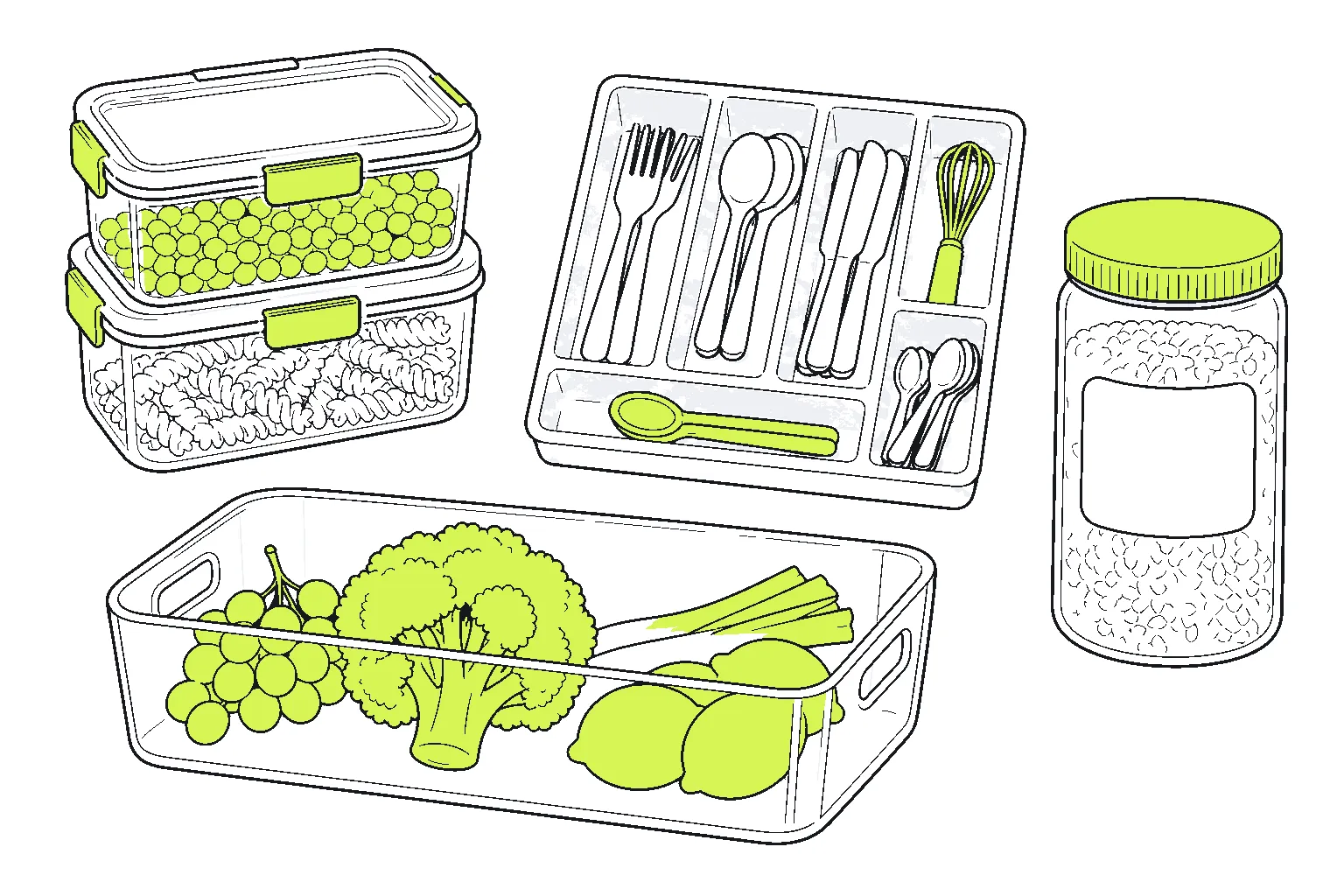 Home
Home Best Fridge Organisers in South Africa
Clear fridge bins, can dispensers, produce savers and turntables ranked for South African kitchens, with honest gimmick verdicts, price bands and buying checks.
Read the ranking Home Best Drawer Dividers in South Africa
Adjustable dividers, cutlery trays, modular bins and honeycomb organisers ranked for South African homes and rentals, with honest verdicts and price bands.
Read the ranking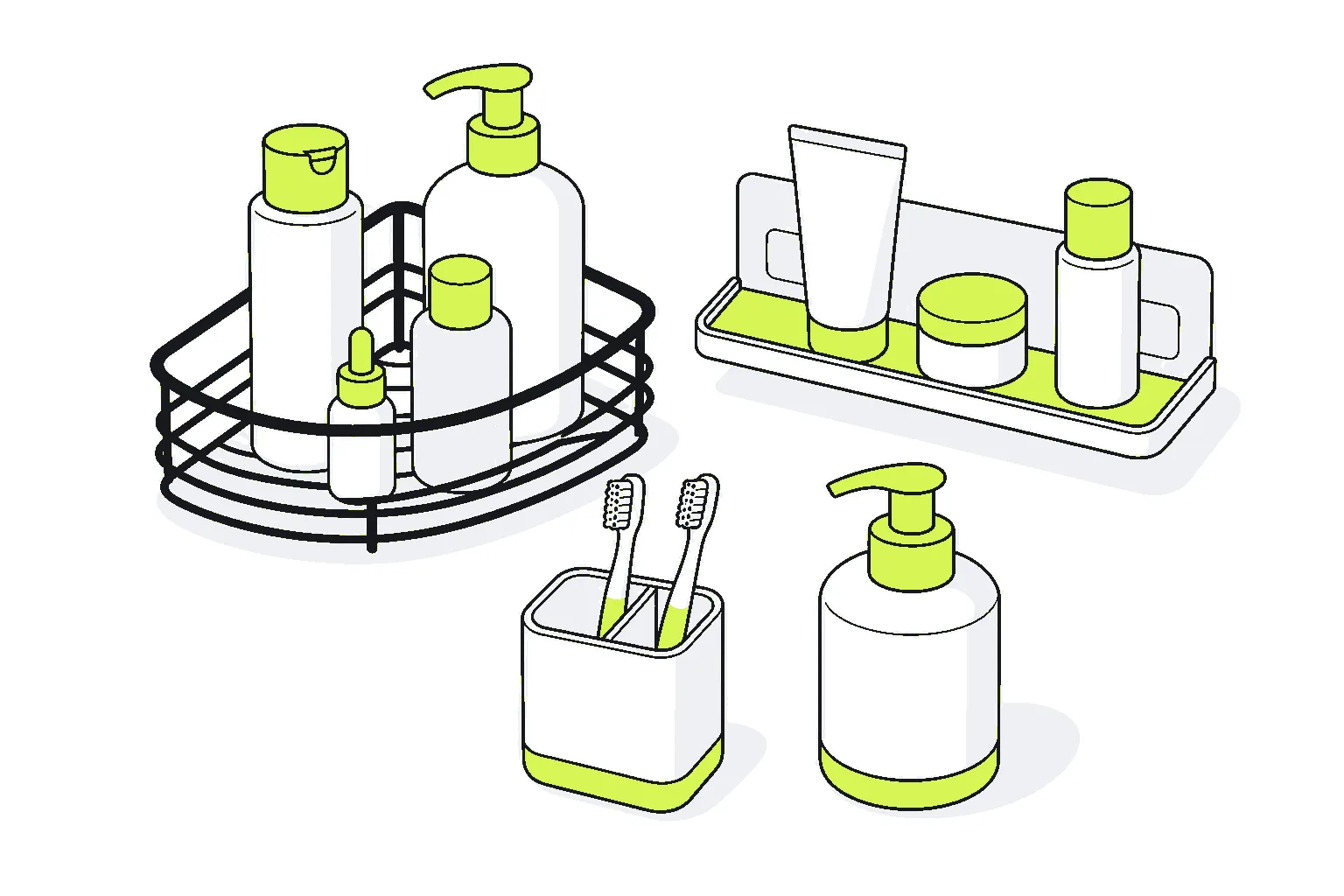 Bathroom
 Best Under-Sink Organisers in South Africa
Expandable racks, clear bins, pull-out drawers and the tension rod trick ranked for SA bathrooms: measure the P-trap first, manage damp, keep the deposit safe.
Read the ranking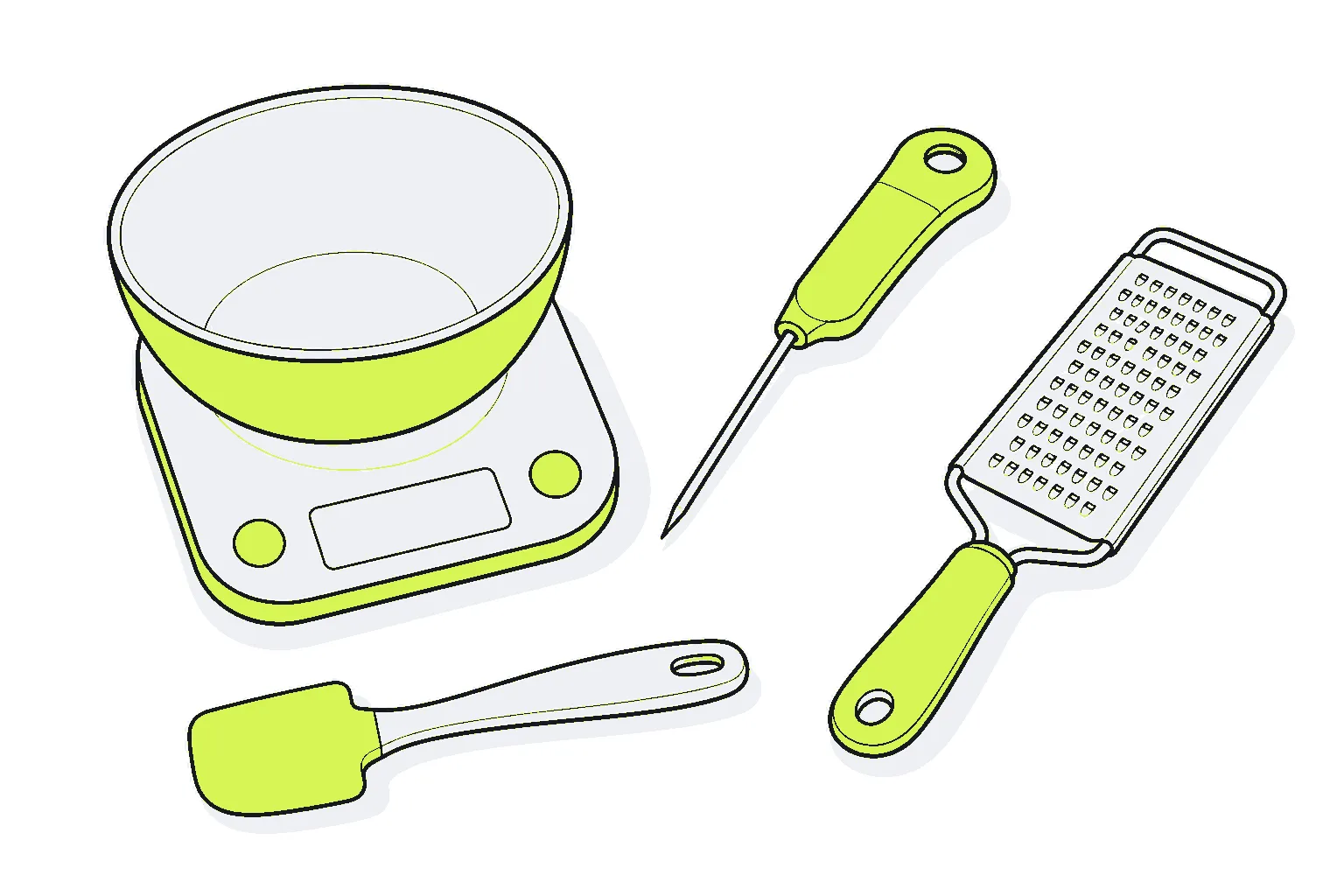 Kitchen
 Best Kitchen Gadgets in South Africa
The kitchen gadgets actually worth owning in South Africa: scales, thermometers, graters and spatulas ranked honestly, plus the gimmicks to leave on the shelf.
Read the ranking