School and Stationery in South Africa, Ranked by Usefulness
Back-to-school gear that survives the January scramble and a year in the school bag.
Every January, South African parents get the same photocopied stationery list and about a week to fill it. The shops know it: PEP, Checkers and PNA aisles are picked clean by the second week, and whatever you buy then has to survive ten months of being crushed under textbooks, dropped in car parks and sat on during break.
This hub ranks the organisation and carry side of that list: pencil cases, pouches and the gear that keeps stationery alive from January to the December report. It does not cover curriculum items or anything a school prescribes; schools set their own lists and rules, so always check yours. What we rank is the layer where a good pick lasts three years and a bad pick dies by March.
The rankings
Buying in this category
Most people arrive here in a January rush, list in hand, replacing whatever died last year. The pattern repeats every summer: the case with the beloved character had a zip that lasted one term, the cheap pouch split at the seam, and this year the plan is to buy once. The fix is boring and reliable: zip quality, washable fabric and honest capacity beat every novelty feature on the shelf.
What to look for
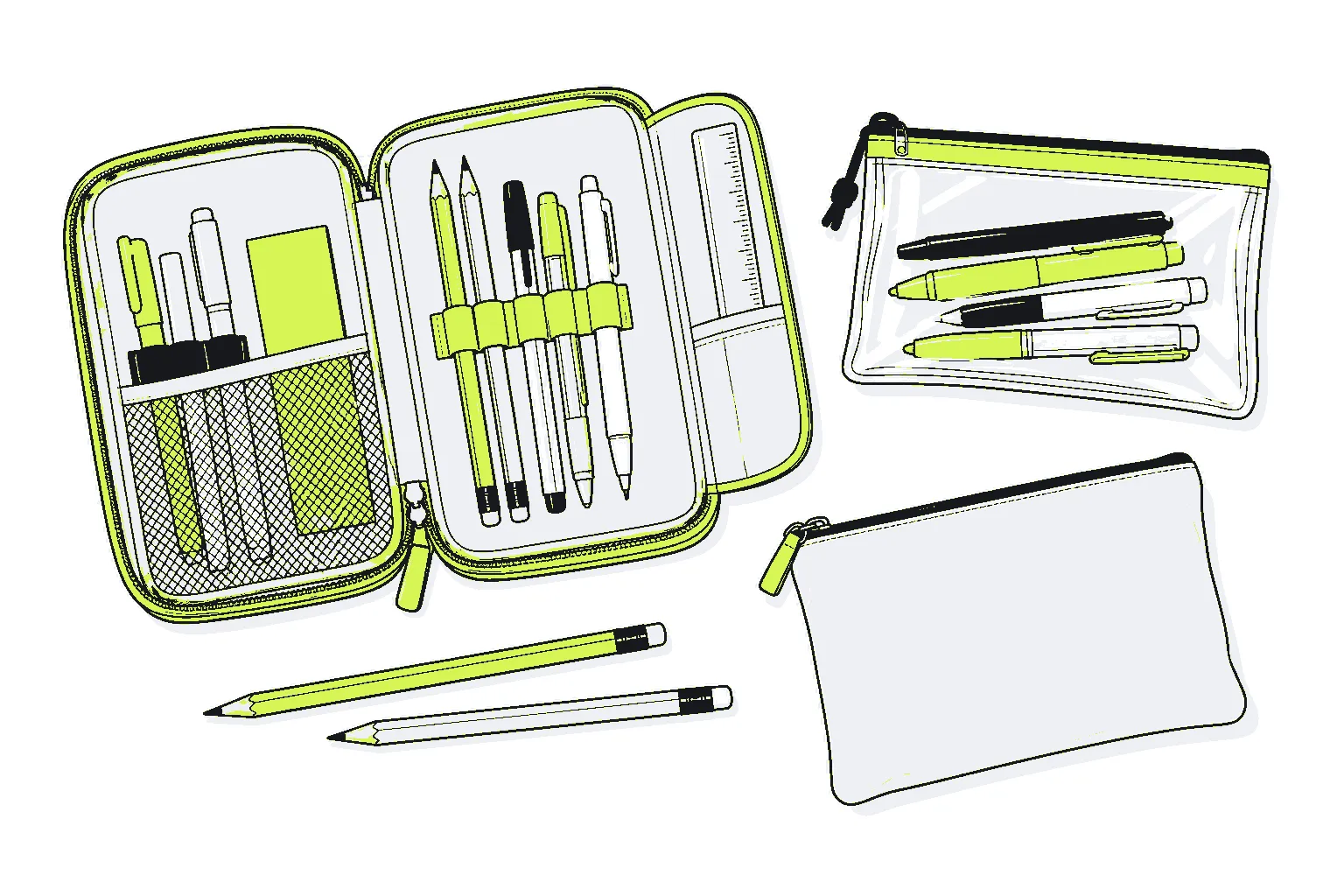
- Zips before anything else. Coil zips with fabric pulls, stitched ends and straight runs; the zip is where almost every pencil case dies first.
- Dark or washable fabric. A school bag is a grim habitat, and a light-coloured case is grey by February.
- Stated dimensions. A case should take full-length pens and a 15cm ruler; nothing sensible takes a 30cm ruler, that lives in the bag.
- Stitched, reinforced corners. Corners hit the ground first and fray first.
- Only as many compartments as will actually be used. Two or three earn their keep; six become one full one and five empty ones.
What to avoid
- Novelty shapes where the zip has to turn tight corners. Zips like straight lines; every corner is a future jam.
- White or pastel fabric cases for daily school duty, unless the label says machine washable and you believe it.
- "With free stationery" bundle padding. The bundled pens are the worst pens made; compare the price of the case alone.
- Glued-on decorations, sequins and appliques. They shed into the bag by the second term and take the surface fabric with them.
Frequently asked questions
When should I buy back-to-school stationery in South Africa?
December or the first days of January, before the rush strips the shelves. Local shops restock, but the good large cases and plain canvas options go first, leaving the novelty shapes. If you are ordering imported from Temu, standard delivery runs 8 to 14 business days, which means ordering in mid-December for a safe mid-January school start.
Do exams really require a clear pencil case?
Many venues do, especially from the senior grades into matric and varsity, where invigilators want to see contents at a glance. Rules differ by school and venue though: some require clear cases or plastic sleeves, others want loose pens on the desk and no case at all. Check the exam instructions rather than assuming, and keep a cheap clear case packed as insurance either way.
Is Temu school stationery gear any good, or should I stick to PEP and PNA?
For cases and pouches the factories overlap and the quality gap is smaller than the price gap; imported wins on variety, local wins on being in your hands today with a returns desk. The honest rule is timing: local for the January scramble, imported for planned December orders. For anything a school specifies precisely, buy local so you can match the list exactly.
What actually makes a pencil case last the whole year?
The zip, then the fabric, then the corners, in that order. A coil zip with a fabric pull and stitched ends survives daily opening; the moulded plastic teeth on novelty cases do not. Thick canvas or polyester shrugs off a school bag, and machine-washable fabric means the mid-year holidays can reset it. The picture on the case has no bearing on any of this, which is the whole problem.