Best Cable Management Products in South Africa: From Spaghetti to Sorted
Last checked: 2 July 2026 Price bands are indicative, not quotes. Listings change.
Quick answer
For most South African desks the fix is a velcro cable tie roll at around R40 plus an under-desk cable tray that lifts the multiplug and slack off the floor, roughly R200 to R550 imported for both. Adhesive clips and a zip sleeve tidy the visible runs. One rule overrides everything: multiplugs need airflow, so never box one in tightly.
The picks
Any desk with a multiplug on the floor beneath it
Under-desk cable management tray (screw-on or clamp-on)
Every pick, compared
| # | Product type | Best for | Verdict | Score | |
|---|---|---|---|---|---|
| 01 | Under-desk cable management tray (screw-on or clamp-on) | Any desk with a multiplug on the floor beneath it | Godsend | 9.0 | Details |
| 02 | Velcro cable tie roll (cut to length) | Every cable on every desk, and the drawer of tangled spares | Godsend | 8.8 | Details |
| 03 | Adhesive cable clips (multi-pack) | Routing single cables along desk edges, legs, skirting and tile | Godsend | 8.1 | Details |
| 04 | Zip-up cable sleeve (neoprene, 1 to 2 metres) | Bundling one visible run of cables into a single tidy line | Solid buy | 7.3 | Details |
| 05 | Cable management box for the multiplug | Hiding a multiplug and its adapters from sight and dust | Solid buy | 7.0 | Details |
| 06 | Under-desk power strip mount (bracket, plate or strap) | Getting the multiplug itself up to desk height, plugs within reach | Solid buy | 7.6 | Details |
| 07 | Cable labels (write-on wraps and tags) | Desks where five identical black plugs share one multiplug | Solid buy | 6.9 | Details |
Why each one made the list
Cable chaos in South Africa has a specific archaeology. Layer one is the normal desk: laptop charger, monitor, lamp, phone cable. Layer two arrived during the load-shedding years: the UPS or inverter, the extra multiplug it demanded, the extension so the router could reach the trolley. The blackout schedule comes and goes; the spaghetti is permanent, unless you spend an hour on it.
Best overall
Under-desk cable management tray (screw-on or clamp-on)
Best for: Any desk with a multiplug on the floor beneath it
The godsend of the category. One steel tray turns a floor of dusty spaghetti into an empty floor, and the vacuum can finally reach the wall.
Why it is useful
A metal tray screws or clamps under the rear of the desktop. The multiplug and every excess loop live inside it; cables from the monitor and laptop drop straight down into the tray, and a single cable exits to the wall socket. The floor under the desk becomes floor again.
Small problem solved
The dusty nest of multiplug, adapters and slack that feet snag and mops avoid, in plain sight below every desk.
Check before buying
- Screw-on needs a desktop of 16 millimetres or more; clamp-on suits flat-pack tops and rentals
- Length of 40 centimetres or more, or the multiplug will not lie flat inside
- Depth enough for a multiplug with plugs inserted, roughly 10 centimetres
- Open mesh over solid trays: better airflow, less dust pooling
- Screw length against desktop thickness, so the screw tip stays inside the wood
Skip it if
- Your desktop is glass or under 16 millimetres of chipboard; use a clamp-on version or a floor-standing cable box instead
- The desk gets moved weekly; clamp-on survives moves, screw-on resents them
Worth it for
- Clears the floor completely, one afternoon, done
- Open mesh keeps air moving around the multiplug
- Out of sight without being sealed away
- Survives desk moves and spring cleans
Not worth it for
- Screw versions need a drill or driver and commit the desktop
- Clamp versions depend on a usable rear lip
- Imported trays vary in steel gauge; thin ones flex under a loaded multiplug
SA note If a UPS or inverter lives under your desk from the load-shedding years, the tray is what separates its cabling from your feet and the mop. The battery box itself stays on the floor: trays carry cables and a multiplug, not a 10 kilogram battery.
Measure screw length against desktop thickness before drilling, or the screw tip crowns through your desk surface. Cheap chipboard strips easily; clamp-on is the safer call there.
under desk cable management traycable tray desk mount Links may earn Godsend a commission. Availability and prices change; check the live listing.
Cheapest big win
Velcro cable tie roll (cut to length)
Best for: Every cable on every desk, and the drawer of tangled spares
The honest hero of cable management. Twenty rand of hook-and-loop does more visible good than any gadget on this page, and every tie can be redone in seconds when the setup changes.
Why it is useful
A roll of back-to-back velcro cuts to any length. Fold the two metres of slack on each cable into a loop, wrap, done. Unlike zip ties, which get cut off and binned at every change, velcro unwraps and rewraps forever, and it cannot pinch or bite a cable.
Small problem solved
The excess length on every single cable you own, which is where most of the visual chaos actually comes from.
Check before buying
- A continuous roll, not pre-cut ties; you want lengths the job decides
- Width of 10 to 20 millimetres; wider holds fat bundles better
- Back-to-back hook-and-loop, the kind that mates with itself
- Total length of 3 metres or more; you will use all of it
Skip it if
- You need cables fixed to a surface; velcro bundles cables to each other, not to walls or desks
Worth it for
- Dirt cheap and reusable indefinitely
- Damages nothing, ideal for rentals
- Fixes the travel tech pouch and the spares drawer while the roll is out
Not worth it for
- Attaches nothing to anything; bundles still need routing
- The hook side collects fluff and beard-trimmer levels of debris over years
SA note Start with the inverter and router cabling: those are the runs you will need to open up during the next fault-finding session, and velcro is the only tie that unties politely at 9pm in the dark.
velcro cable ties rollhook and loop cable tie roll Links may earn Godsend a commission. Availability and prices change; check the live listing.
Best for wall runs
Adhesive cable clips (multi-pack)
Best for: Routing single cables along desk edges, legs, skirting and tile
A godsend on the right surface and a deposit deduction on the wrong one. On desk undersides, furniture and tile they are excellent; on rental paint, test one first and read the risk note.
Why it is useful
Small clips with adhesive backs route individual cables along edges and surfaces: the charger cable held at the desk edge so it stops diving to the floor, the monitor cable run down a desk leg, the LAN cable tucked along the skirting instead of across the doorway.
Small problem solved
The charging cable that falls behind the desk every time you unplug it, and loose cables draped across walking lines.
Check before buying
- Adhesive type: stretch-release or removable versions exist for rentals
- Clip channel size against your cable diameter; one size does not fit HDMI and lamp cord alike
- Pack composition; forty clips of one useless size is not a bargain
- Surface prep instructions; adhesive on dust holds nothing
Skip it if
- Your walls wear cheap contractor PVA that lifts if you look at it sternly; clip to furniture and skirting instead
Worth it for
- Cheap, instant, tool-free routing
- Desk-edge cable holders end the daily cable dive
- Works on melamine, metal, glass and tile where nothing else grips
Not worth it for
- Adhesive is single-use; repositioning means a fresh pad
- Quality varies wildly between packs, even from the same seller
- Heat softens cheap adhesive; sun-facing walls shed clips in summer
SA note Melamine desk undersides and tiled walls, both standard issue in South African rentals, are the ideal surfaces: strong hold, zero paint involved.
On rental walls, strong adhesive can lift paint and cost you part of a deposit when you move out. Test one clip in a hidden spot for a week, or route along furniture, skirting and desk undersides where paint is not in play.
adhesive cable clipscable clips self adhesive desk Links may earn Godsend a commission. Availability and prices change; check the live listing.
Best for rentals
Zip-up cable sleeve (neoprene, 1 to 2 metres)
Best for: Bundling one visible run of cables into a single tidy line
Solid for one specific job: turning four cables running the same way into one fat, tidy snake. Change your cables monthly and the novelty of unzipping the whole run wears off fast.
Why it is useful
A neoprene tube with a zip swallows the monitor, power and USB cables that all travel from desk to wall together. One dark line reads as intentional; four sagging cables read as chaos. Nothing attaches to any surface, so there is nothing for a landlord to inspect.
Small problem solved
The visible waterfall of mixed cables from desktop to plug point, especially where the desk cannot sit flush against the wall.
Check before buying
- Zip-up versions beat thread-through wraps; nobody rethreads a wrap twice
- Diameter capacity of four to six cables; overstuffed sleeves bulge and gap
- Stated length against your actual run; joins between two sleeves look untidy
- Neoprene for flexibility, braided mesh for looks; both work
Skip it if
- The bundled cables change often; every change means unzipping the full run
- The run bends sharply; a stuffed sleeve resists corners
Worth it for
- No adhesive, no screws, nothing a rental inspection can flag
- Genuinely tidy result for very little money
- Doubles as light protection against chair wheels and puppy teeth
Not worth it for
- Any cable change reopens the whole sleeve
- Bulges if you force too many cables in
- Collects dust like any fabric surface
SA note The desk-to-inverter run is the classic use: it is the most visible cable bundle in the room and the one guests ask about. One sleeve makes it look planned rather than survived.
cable management sleeve zipneoprene cable sleeve Links may earn Godsend a commission. Availability and prices change; check the live listing.
Best for dust and looks
Cable management box for the multiplug
Best for: Hiding a multiplug and its adapters from sight and dust
Solid, with a safety asterisk doing heavy lifting. It hides the ugliest object in the room and keeps dust out, but it must be oversized, ventilated and never stuffed tight.
Why it is useful
A ventilated box swallows the multiplug, the adapter bricks and the slack, leaving one cable in and a few cables out. The real benefits are dust, which settles into floor-level multiplugs relentlessly, and visual calm. Toddlers and cats also lose interest in what they cannot see.
Small problem solved
The multiplug medusa in plain sight, and the grey felt of dust that builds up on floor-level plugs.
Check before buying
- Real ventilation slots at both ends, not decorative dimples
- Size up: the multiplug must lie flat with every plug inserted and air around it
- Cable exits wide enough that leads are not pinched at the lip
- Rigid ABS or bamboo lids; soft PVC warps near warm bricks
Skip it if
- Your multiplug is unbranded, crackly or warm to the touch; replace it with a reputable one from a local retailer before hiding it
- A heater, kettle or any high-draw appliance plugs in at that point; that cable stays out of any box, full stop
Worth it for
- Keeps dust off the contacts
- Instant visual upgrade for the worst corner of the desk
- Mild toddler and pet deterrent
Not worth it for
- Out of sight can mean out of mind; a failing adapter is easier to ignore in a box
- Bulky, and the temptation to overstuff is real
- Does nothing for the cables outside the box
SA note Winter habit check: if an oil heater shares the desk circuit, its plug lives outside the box, visibly. Boxes are for the router, the chargers and the monitor plugs, not for anything that glows.
Heat needs somewhere to go. Never box a cheap or heavily loaded multiplug tightly, never run a heater through a boxed multiplug, and pick a box with real ventilation and spare room. If a multiplug is warm to the touch, the fix is a better multiplug from a local retailer, not a prettier box around it.
cable management boxpower strip cable box large Links may earn Godsend a commission. Availability and prices change; check the live listing.
Best off-the-floor fix
Under-desk power strip mount (bracket, plate or strap)
Best for: Getting the multiplug itself up to desk height, plugs within reach
Solid and slightly nerdy: a bracket that moves the multiplug to where the cables already are. To be clear, we rank the passive mount only; the strip that goes in it, you buy locally and certified.
Why it is useful
Screw plates, adhesive brackets and strap mounts hold a multiplug against the underside or back edge of the desktop. Plugging in the laptop stops being a crawl under the desk, cable runs get shorter, and the floor loses its last excuse for clutter.
Small problem solved
The daily dive under the desk to plug in a charger, and the multiplug that lives where the mop wants to go.
Check before buying
- Mount style against your strip: universal straps fit almost anything, screw-slot plates need matching keyholes
- Rated load with all plugs and cable weight hanging on it
- Adhesive versions need a degreased surface and a day to cure before loading
- Clamp and strap versions leave no marks, the rental-friendly pick
Skip it if
- The strip feeds a heater or kettle; high-draw appliances keep their multiplug boring, visible and on the floor
- Your desk hosts an inverter trolley with its own bolted-on strip already
Worth it for
- Ends the under-desk plug crawl
- Pairs naturally with a cable tray for a fully clear floor
- Strap versions fit any multiplug shape
Not worth it for
- Adhesive mounts eventually drop a loaded strip if cables pull on it
- Screw versions commit the desktop
- One more thing to unbolt when you move house
SA note If the desk runs off a UPS or inverter, desk-height mounting also keeps switches and status lights where you can see them, which you will appreciate the day something starts beeping.
We do not rank multiplugs or UPSes themselves. Mount only a reputable, locally bought strip, and let adhesive mounts cure for a full day before hanging anything on them.
power strip mount under deskpower strip holder bracket Links may earn Godsend a commission. Availability and prices change; check the live listing.
Cable labels (write-on wraps and tags)
Best for: Desks where five identical black plugs share one multiplug
Solid in a deeply unglamorous way. Labels do nothing for looks; they exist for the day you must unplug exactly one thing without taking the router down mid-meeting.
Why it is useful
Write-on wraps and bread-tag style clips name each plug at the multiplug end, where every brick looks identical. Thirty minutes of labelling converts future fault-finding from trial and error into reading.
Small problem solved
The which-plug-is-the-router lottery, played standing behind a desk holding a torch, usually at the worst possible time.
Check before buying
- A writable surface that takes permanent marker; glossy tags shrug ink off
- Wrap size against fat plug bricks, not just slim cables
- Laminated flap versions stay legible; bare paper fades and grimes
- Enough in the pack to do the whole desk plus the TV corner
Skip it if
- Your whole desk is a laptop and a lamp; two cables do not need an index
Worth it for
- Near-zero cost, one-time effort
- Pays off exactly when stress is highest
- Anyone in the house can now unplug the right thing
Not worth it for
- A fiddly half hour to do properly
- Cheap tags fade or fall off in a year
- Zero visual improvement; this is admin, not decor
SA note Label by outage priority: router, monitor, chargers, in that order. When the desk is running off the inverter and something must be shed, you want to read the answer, not deduce it.
cable labels write oncable tags identification Links may earn Godsend a commission. Availability and prices change; check the live listing.
Buying guide
Work in the right order: bundle, route, then hide
Cable management fails when people buy the pretty stuff first. The order that works: velcro the slack on every cable, route the survivors with clips or a sleeve, then lift the multiplug into a tray or onto a mount. Hiding comes last, if anything still offends.
Done in that order, most desks are fixed before the expensive items are even needed. The R40 velcro roll does the loudest work; the tray does the deepest; the box is optional polish.
The load-shedding legacy under South African desks
Years of scheduled blackouts left a hardware stratum under the national desk: UPSes, inverter trolleys, extra multiplugs and the extension cords that connected them. Whatever the grid does next, that gear is staying, and it has two non-negotiables: airflow and access.
Airflow means nothing that hums or charges gets sealed in a box or buried under a cable bundle. Access means you can reach switches and see status lights without moving furniture. Trays, labels and velcro respect both; tight boxes and zip ties respect neither.
Renting: tidy cables, intact deposit
The rental-safe toolkit is velcro, sleeves, clamp-on trays and clips on furniture rather than paint. Adhesive on walls is the only product class here that can cost you money at inspection time, and cheap PVA paint gives adhesive its best grip and worst exit.
If a wall run is unavoidable, test one clip in a hidden spot for a week, and favour stretch-release adhesive. Skirting boards, tiles and the desk itself take adhesive far more forgivingly than paint does.
What we deliberately did not rank
No multiplugs, no surge protectors, no UPSes, no chargers, no smart plugs. Anything with current through it needs certification you cannot verify from a marketplace photo, and a local returns desk when it fails. Buy those from established South African retailers and let this page organise around them.
The one grey area, the under-desk power strip mount, made the list because the mount itself is a passive bracket. The strip that clicks into it is still your local, certified purchase.
Frequently asked questions
What is the best way to hide cables on a desk against a wall?
Bundle the slack on each cable with velcro, drop everything into an under-desk tray with the multiplug, and run one sleeve or clipped line to the wall socket. That combination removes the floor nest and the visible waterfall, costs roughly R250 to R600 imported, and touches nothing a landlord could bill you for except optional wall clips.
How do I manage the cables around a UPS or inverter?
Airflow and access first, looks second. Velcro the slack, label every plug by outage priority, and keep the unit itself out of boxes and away from tight bundles; anything that charges or converts power makes heat. A cable tray above it handles the desk cables, and the battery box stays on the open floor where it can breathe.
Will adhesive cable clips damage wall paint?
Sometimes, and rental paint is the highest-risk surface: strong adhesive on cheap PVA can lift a visible patch on removal. Test one clip in a hidden spot for a week before committing a wall, prefer stretch-release adhesive, and route along skirting, tile or furniture where possible. On melamine and desk undersides, clips are essentially risk-free.
Is it safe to put a multiplug in a cable management box?
Only with margins. The box must be ventilated, oversized and loosely packed, the multiplug should be a reputable locally bought one, and nothing high-draw like a heater or kettle should run through it. A warm multiplug never gets boxed; warmth means it needs replacing, not hiding. Treat the box as dust protection, not as a cupboard to stuff full.
Should I buy a cable sleeve or a cable tray first?
Ask where the mess is. A multiplug and slack on the floor wants the tray; a visible bundle running from desk to wall wants the sleeve. If you can only spend R50, buy neither and start with a velcro roll, which improves both problems and every future setup you will ever own.
Are the cheap cable management kits on Temu worth it?
The velcro rolls, sleeves and clip packs are generally fine, and the same items cost more locally without being meaningfully better. Check size breakdowns on clip packs and reviews on tray steel thickness. Expect 8 to 14 business days of delivery, so order ahead; for a same-day fix, hardware stores sell velcro and trunking off the shelf.
Related rankings
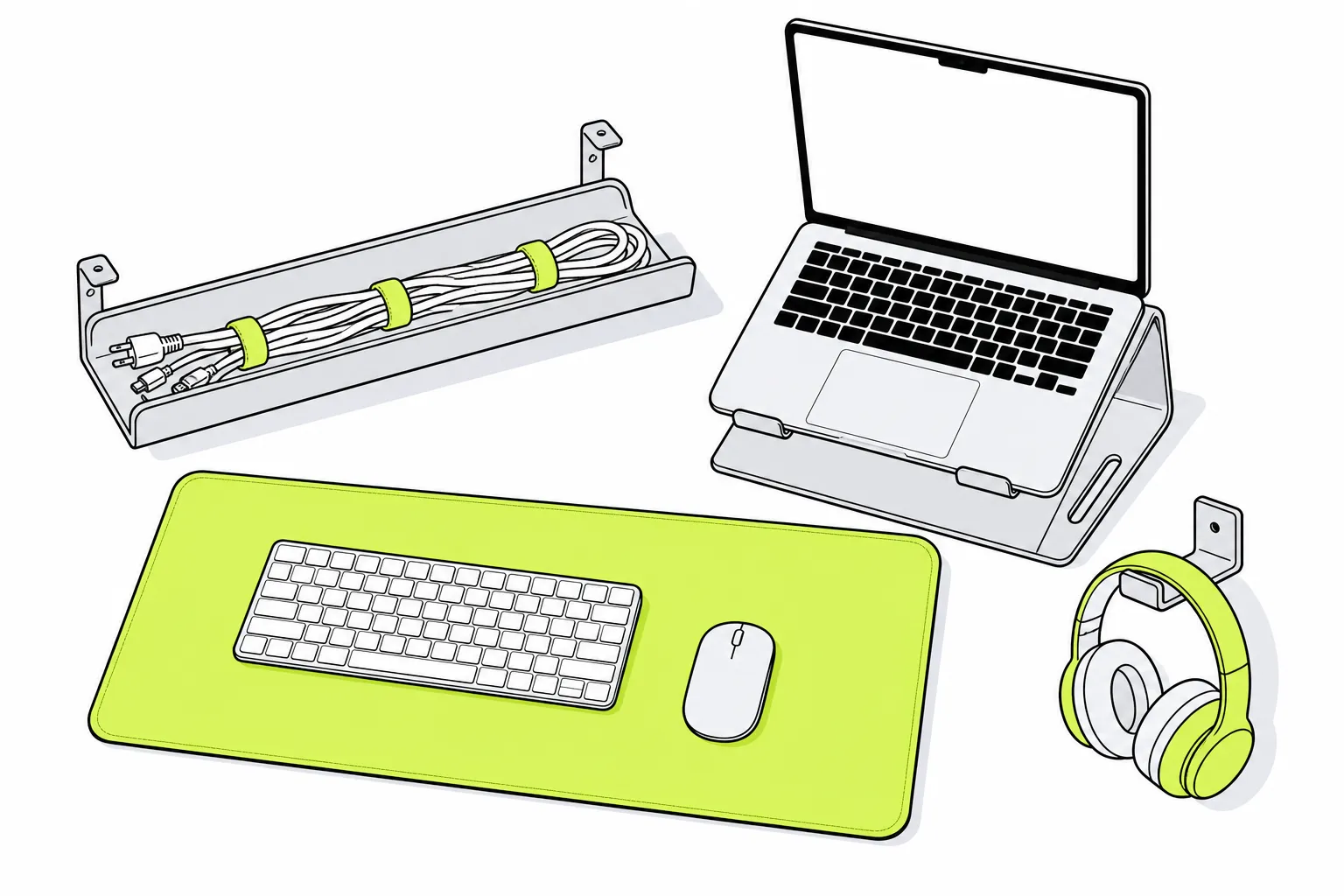 Desk
Desk Best Desk Accessories in South Africa
Monitor risers, desk mats, drawer trays and headphone stands ranked for South African desks, with honest verdicts, price bands and the desk toys to skip.
Read the ranking Desk Best Laptop Stands in South Africa
Fixed aluminium stands, adjustable risers, foldable travel stands and vertical holders ranked for South African desks, with honest verdicts and price bands.
Read the ranking Gifts
Gifts Best Useful Gifts Under R200 in South Africa
Secret Santa, teacher gifts and stocking fillers under R200 that South Africans actually keep: eight useful types with honest verdicts and price bands.
Read the ranking